

FRESHINTHEBOX
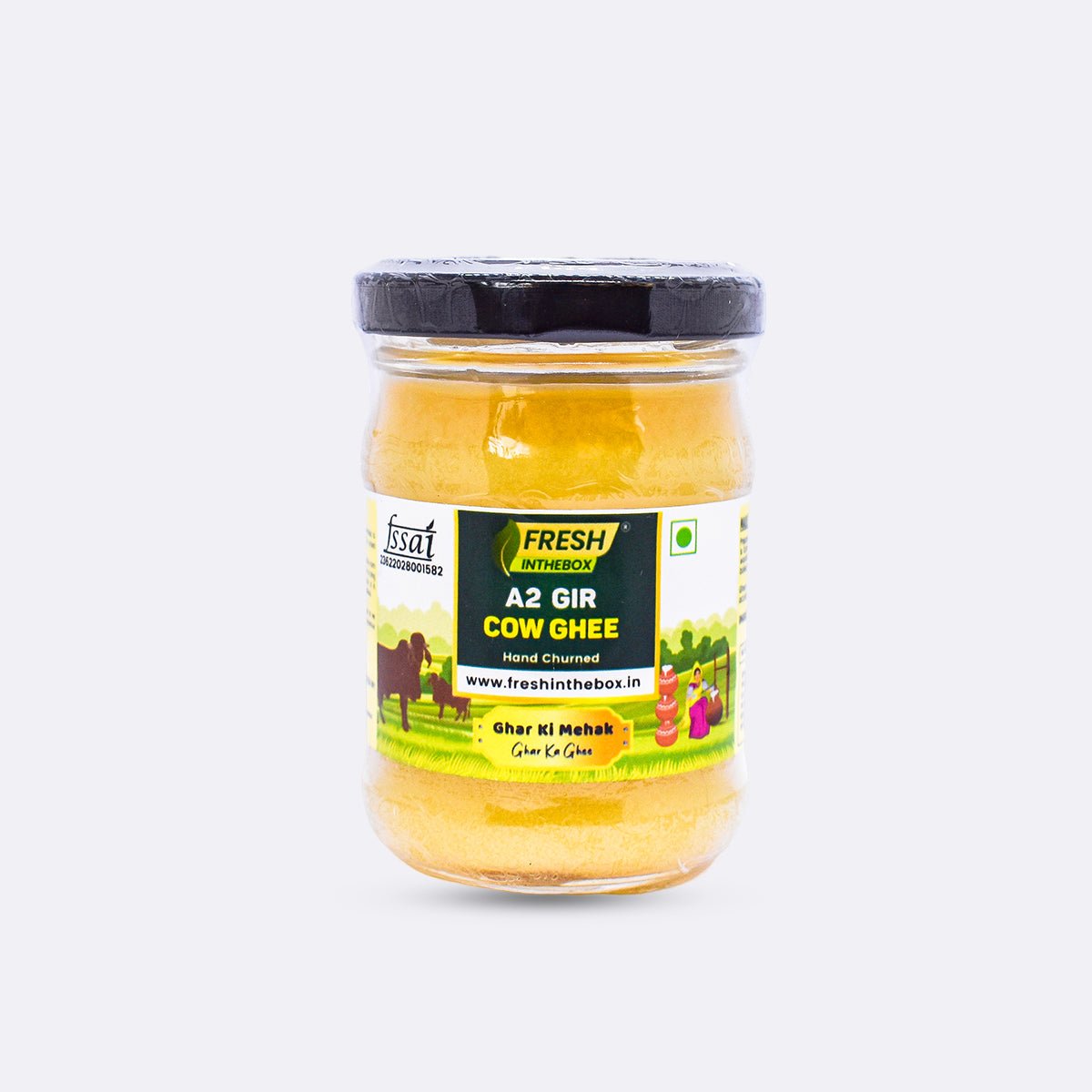
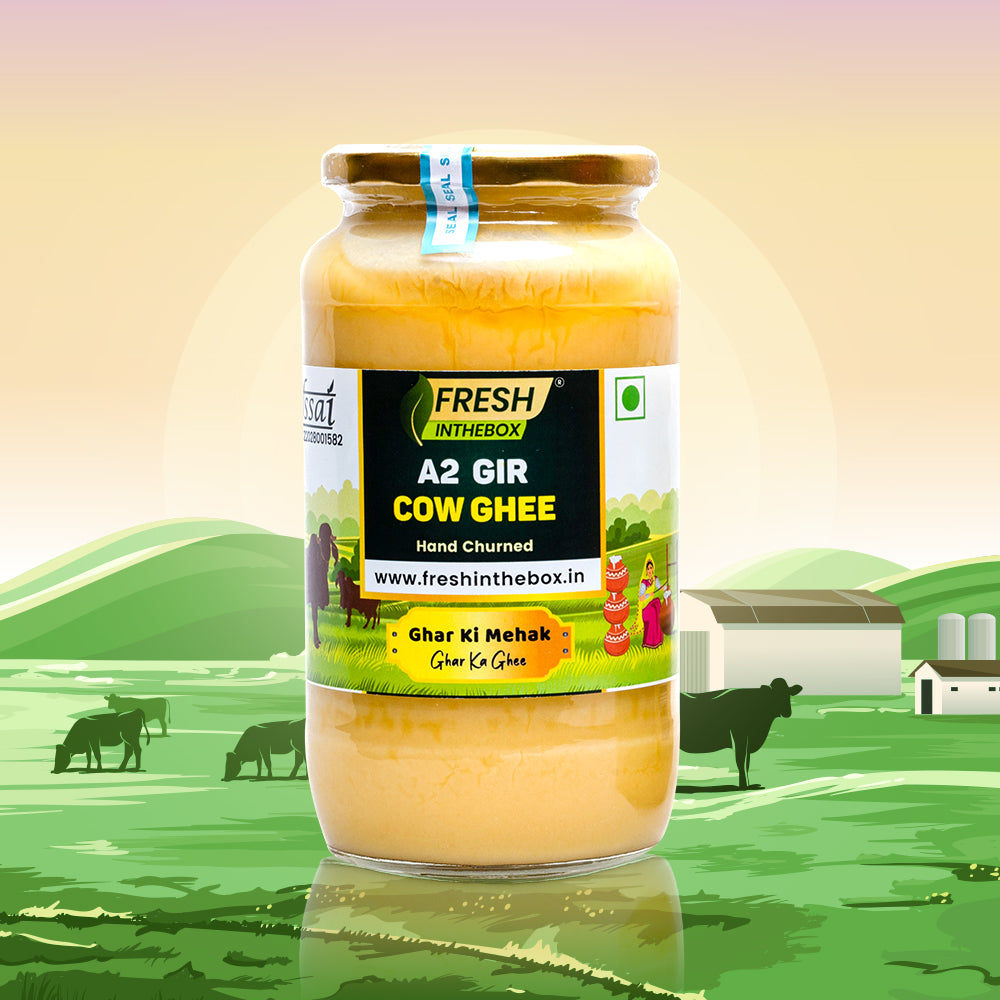
A2 Gir Cow Ghee | The "Bilona" Truth
A2 Gir Cow Ghee | The "Bilona" Truth
Let's be real: Most "Desi...

Delivery Date
Enter PIN code to check delivery date for A2 Gir Cow Ghee | The "Bilona" Truth:
Couldn't load pickup availability
Let's be real: Most "Desi Ghee" in the market is just clarified butter made from industrial cream. It’s mass-produced, stripped of nutrients, and sold as "pure." Our A2 Gir Cow Ghee is the opposite. It’s made via the Bilona Curd-Churned method, a slow, 48-hour ritual that most big brands won't touch because it's "inefficient."
We start with raw milk from indigenous Gir Cows. We don’t just spin out the cream. We boil the milk, cool it, and set it into curd overnight using a starter culture. By morning, that curd is hand-churned with a wooden rod (the Bilona). The butter that floats up is then slow-cooked on a mud stove or low flame until it turns into that deep, grainy, danedaar gold.
The "A2" Reality: Why the Breed Matters
Don't fall for generic "Cow Ghee" labels. Most commercial milk comes from crossbred HF/Jersey cows that carry A1 proteins, the stuff that leaves you feeling bloated.
The Gir Pedigree: Authentic Gir cows produce A2 Beta-casein.
Gut Health: This protein is structurally similar to human milk. It doesn't trigger the "heavy" feeling that factory ghee does.
Real Nutrition: Because it’s curd-churned, the vitamins (A, D, E, K) are actually bioavailable. Your body knows what to do with it.
How to Spot the "Fake" Stuff
If your ghee looks like smooth yellow grease, it’s factory-made. Authentic Bilona Ghee has a life of its own:
The Grain (Danedaar): It must be grainy. Those tiny granules are proof of slow-cooling and zero chemical processing.
The Scent: It should smell warm and slightly toasted. If it smells like nothing, it’s been deodorized.
The Texture: It changes with the weather. It’s supposed to.
Bilona Ghee vs. Factory Cream Ghee
|
Feature |
Our A2 Bilona Ghee |
Standard "Cow Ghee" |
|
Process |
Hand-Churned Curd |
High-Speed Cream Centrifuge |
|
Time |
48 Hours per Batch |
A few hours |
|
Yield |
30L Milk ~ 1kg Ghee |
High Yield (Cheaper) |
|
Protein |
Pure A2 Beta-Casein |
Mostly A1 (Hard to digest) |
|
Additives |
Zero. No Preservatives. |
Often has stabilizers |
 Free Shipping On Order Above
 24/7 Customer Support
 Up to 30 Days Return
 70+ Quality checks