

FRESHINTHEBOX
Basmati Biryani Rice | The Grains That Make the Dum
Basmati Biryani Rice | The Grains That Make the Dum
Everyone calls their rice "Biryani...

Delivery Date
Enter PIN code to check delivery date for Basmati Biryani Rice | The Grains That Make the Dum:
Couldn't load pickup availability
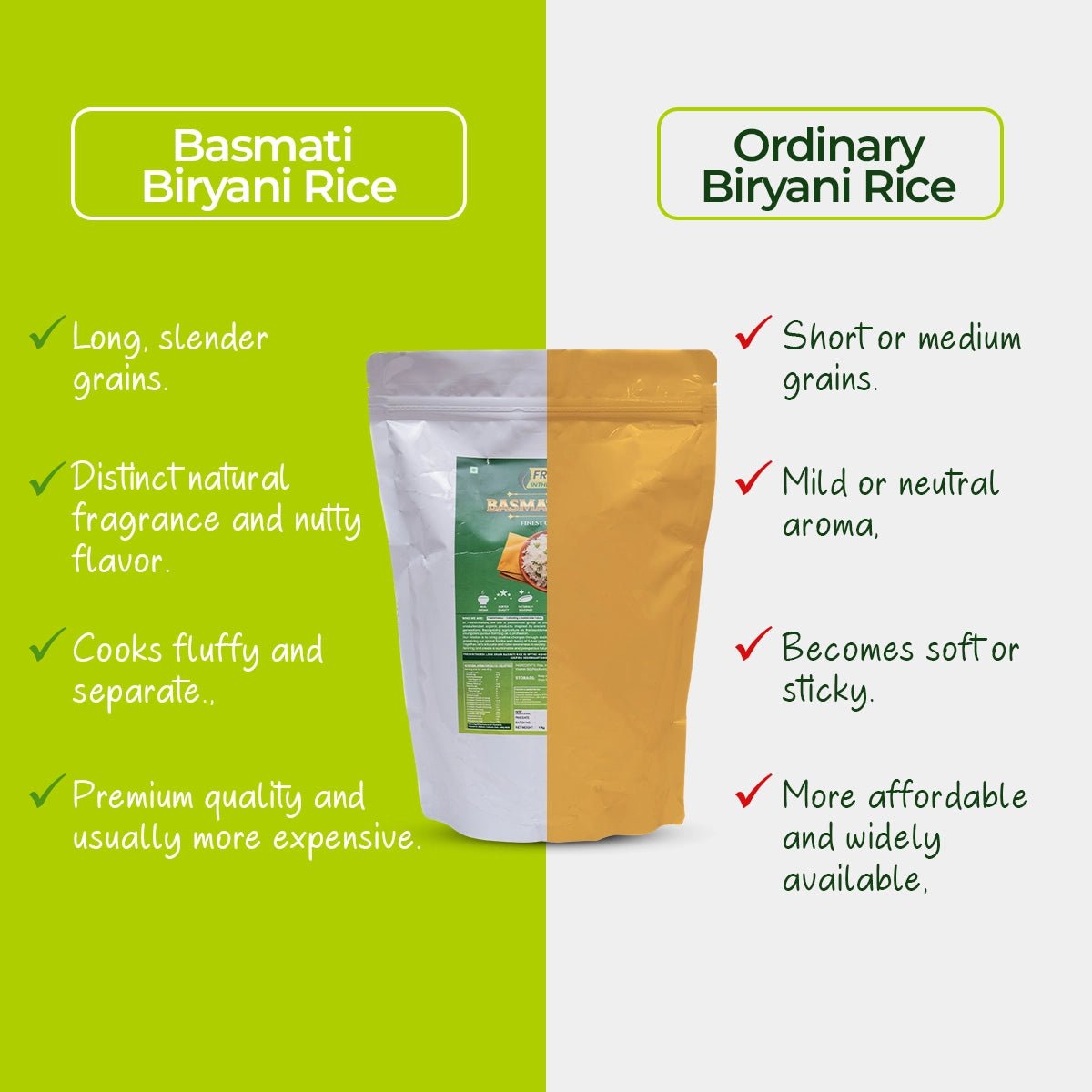
Everyone calls their rice "Biryani Special". But you know the truth the second you open the pot. If your rice turns into a sticky "pulao" or breaks into tiny white bits when you mix the masala, you used the wrong grain.
Biryani is a high-stakes dish. The rice isn't just a side; it’s the structure. Our Biryani Basmati is selected for one reason: Structural Integrity. These are extra-long grains from the Himalayan foothills, naturally aged for up to 24 months. That aging is what allows the grain to absorb the heavy fats of meat, the moisture of the curd, and the intensity of the spices without turning into mush.
The "70 Percent" Golden Rule
The most common disaster in Indian kitchens is over-boiling the rice before layering. If you boil it until it’s soft, the dum will kill it.
The Parboil: You must boil the rice only until it’s 70% done. When you bite a grain, the center should still feel slightly firm (the "kani").
The Finish: That remaining 30% of cooking must happen inside the sealed handi. The rice finishes by drinking in the steam from the meat and saffron water. That’s how you get grains that are long, separate, and packed with flavor.
The Elongation: Watch it grow. A premium 1121 aged grain should nearly double in length after cooking, staying slender rather than getting fat.
Why 24-Month Aging is Non-Negotiable
Freshly harvested rice is full of moisture. If you use it for Biryani, the starch will explode, and you’ll get a sticky mess.
Moisture Loss: Aging naturally dries out the grain. This makes it "thirsty" for your biryani stock.
Aroma Profile: The signature nutty Basmati scent only deepens with time. If your rice smells like nothing, it wasn't aged.
Non-Sticky Finish: Aged grains have less surface starch, meaning they slide off each other instead of clumping.
 Free Shipping On Order Above
 24/7 Customer Support
 Up to 30 Days Return
 70+ Quality checks