


FRESHINTHEBOX
Wood Pressed Yellow Mustard Oil | 100% Pure & Traditional Lakdi Ghani
Wood Pressed Yellow Mustard Oil | 100% Pure & Traditional Lakdi Ghani
Experience the difference of original...

Delivery Date
Enter PIN code to check delivery date for Wood Pressed Yellow Mustard Oil | 100% Pure & Traditional Lakdi Ghani:
Couldn't load pickup availability
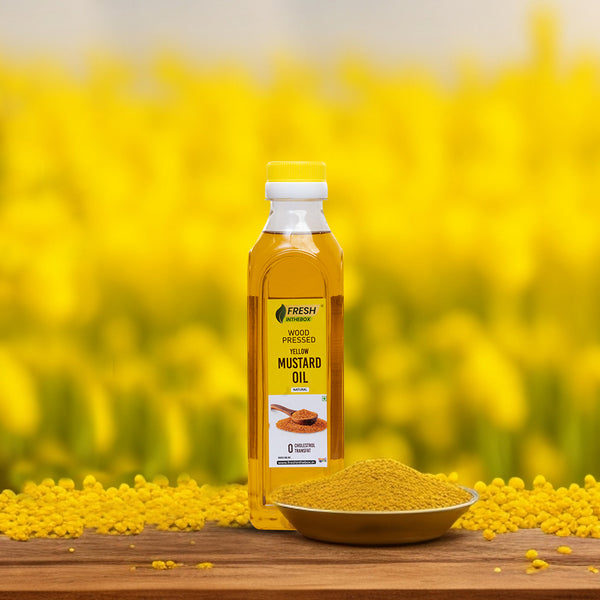
Experience the difference of original mustard oil that hasn't been stripped by industrial heat. Our wood pressed yellow mustard oil is extracted using traditional wooden ghanis, ensuring the seeds are never heated above 35°C. The result? A natural mustard oil with a deep gold hue and an authentic aroma that refined oils simply can't match.
Why Choose Our Cold Pressed Yellow Mustard Oil?
While refined mustard oil is often bleached and deodorized using chemicals our process is entirely mechanical. We believe the best sarso oil is the one that stays closest to the farm.
Mild Yet Flavorful: Yellow mustard oil is naturally milder than black variety. It provides the perfect balance for mustard oil for cooking, offering a subtle nutty flavor without the aggressive pungency.
Nutrient Dense: As an organic cold pressed mustard oil, it retains high levels of Vitamin E and Omega-3 fatty acids that are usually lost in high-heat extraction.
Chemical-Free Purity: No hexane, no palm oil blending, and zero preservatives. This is pure mustard oil in its most honest form.
Product Specifications & Value
If you are looking to buy mustard oil that prioritizes health over shelf-life, here is why our virgin mustard oil stands out:
|
Feature |
Details |
|
Type |
Extra virgin mustard oil (First Press) |
|
Extraction |
Traditional Wood Press (Lakdi Ghani) |
|
Best For |
Daily tadka, fish curries, pickling, and winter scalp massage |
|
Purity |
Organic mustard oil; FSSAI Certified |
|
Appearance |
Deep gold with natural sediment (Proof of minimal filtration) |
How to Use Cold Pressed Sarso Oil
Healthy Cooking: With a high smoke point, it’s the best cold pressed mustard oil for deep frying and sautéing.
Traditional Pickling: Its natural antimicrobial properties make it the top choice for indian mustard oil pickles.
Wellness: A staple in North Indian households, use it as a natural mustard oil for scalp massages during winter to improve circulation.
The Physics of Purity: Why We Still Use Wood
Most people ask why we stick to the traditional Lakdi Ghani when modern machinery is faster. The answer is simple: temperature.
The Heat Problem: Even "cold press" metal expanders can reach 60°C due to friction, which "cooks" the nutrients.
The Wood Advantage: Wood is a natural insulator. It keeps our yellow mustard seeds at a stable room temperature, preserving the volatile oils and medicinal properties.
The Sediment Proof: That cloudiness at the bottom isn't an "imperfection". It is the fiber and protein of the mustard seed, left intact because we refuse to use chemical filters.
 Free Shipping On Order Above
 24/7 Customer Support
 Up to 30 Days Return
 70+ Quality checks


Uses
FAQs
Wellness Begins with Awareness
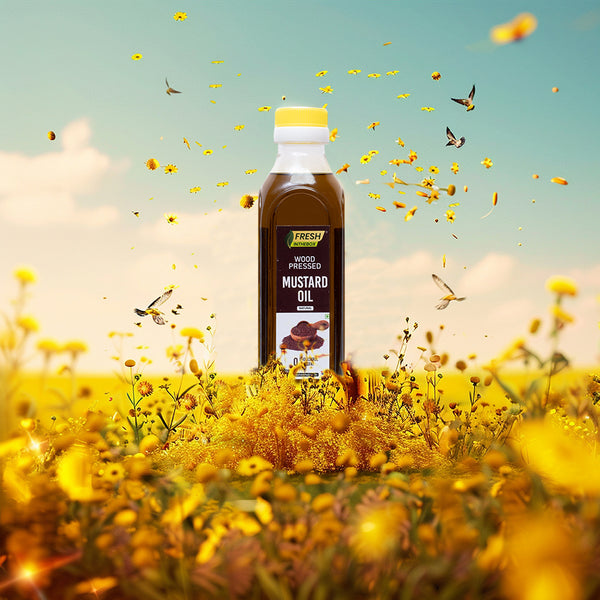 Mustard Oil Mustard Oil
|
 Almond Oil Almond Oil
|
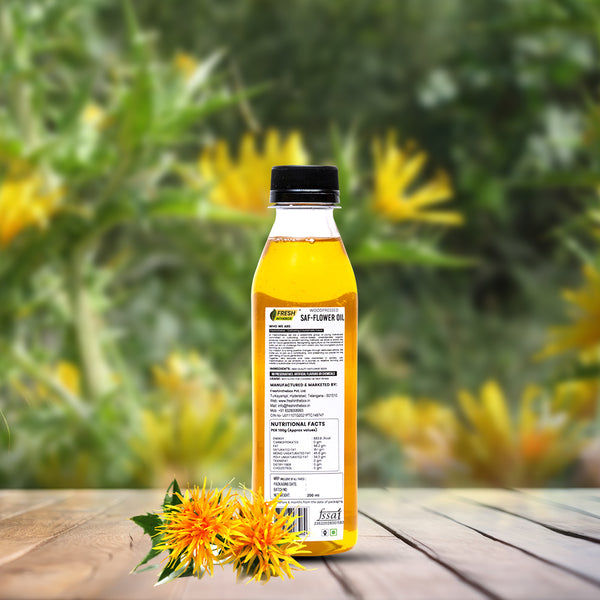 Safflower Oil Safflower Oil
|
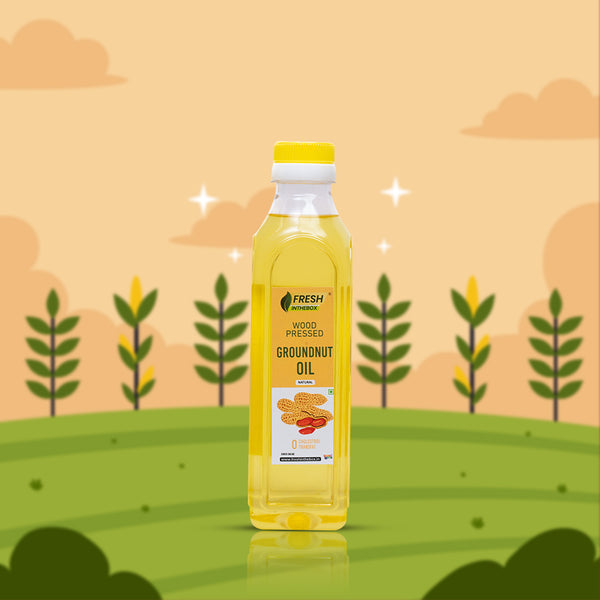 Groundnut Oil Groundnut Oil
|
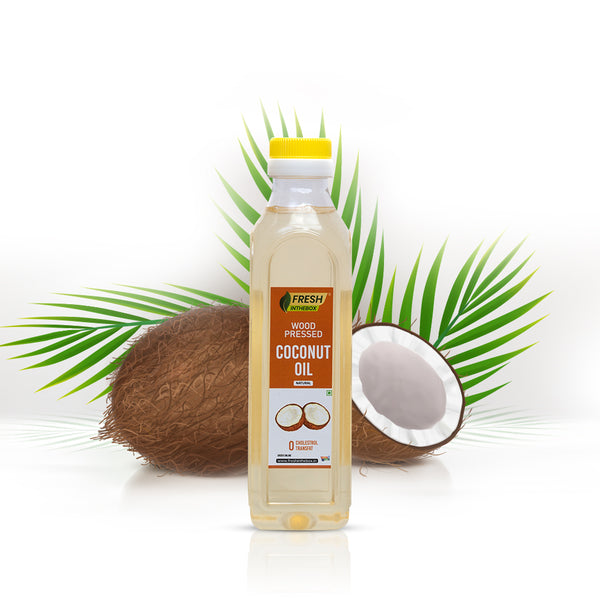 Coconut Oil Coconut Oil
|
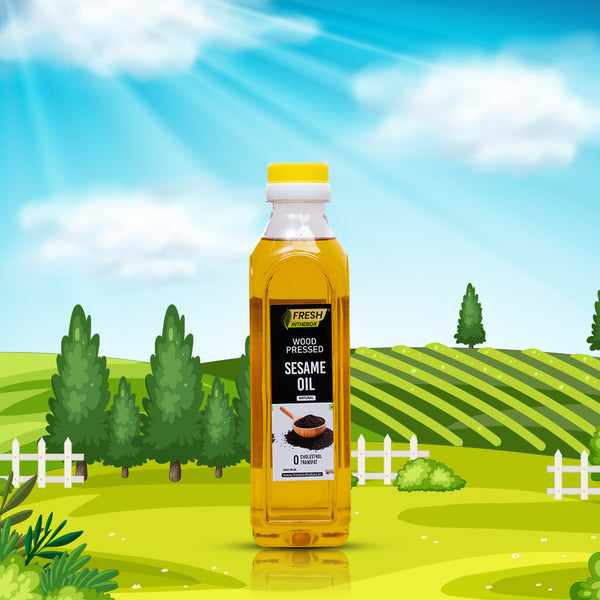 Sesame Oil Sesame Oil
|
|
| Uses |
|
|
|
|
|
|
| Suitable weather | Winter & cold climates | Winter & dry weather | Summer | All seasons | All seasons (especially coastal & humid) | Winter & moderate climates |
| Good for | Improves circulation, aids digestion | Nourishing skin & hair, brain health | Weight management, heart health | Heart health, cholesterol control | Boosts immunity, nourishes hair | Reduces inflammation, strengthens bones |
| Aroma | Strong, pungent | Sweet, light | Neutral | Mild, nutty | Sweet, tropical | Distinct, earthy |
| Nutrients (RDA) | Omega-3, & MUFAs, & antioxidants | Vitamin E, magnesium, omega fatty acids | Omega-6, Vitamin E | Rich in MUFAs, Vitamin E | Lauric acid, MCTs, Vitamin E | Calcium, zinc, antioxidants |
| Flavour | Sharp & pungent | Mild & slightly sweet | Light & neutral | Mild & nutty | Sweet & rich | Nutty & slightly bitter |